|
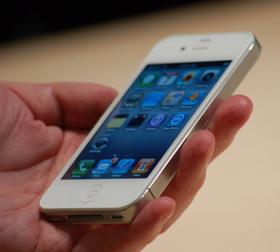
Thanks to his ability to restructure the time-space continuum in accordance with his will, Steve Jobs normally gets away with pushing the credibility barrier a bit during product launches. But when he recently announced that the iPhone 4 sports a “Retina Display,” questions were raised. Were those tiny little pixels really so small that, when the iPhone 4 is vigilantly held a particular number of inches in front of your nose, the human eye cannot detect them? Calculators were whipped out, numbers were crunched, and experts batted about their sometimes-opposing views. We sorted through all the noise, interviewing key players (via email) to bring you the definitive answer. And that answer is: close, Steve, but no cigar.
But the really important question isn’t whether Steve’s math is perfectly correct. No, the more germane question is whether an ever-growing plethora of teeny-tiny pixels really matters in the greater scheme of things. Do more pixels equate to a better gadget experience for users? Are these little red-blue-green dots the holy grail of mobile displays--and if they are, can we trust companies to provide us with accurate specifications?
The math discussed in media stories and blog posts about the iPhone 4 was enough to give many of us brain cramps. Nonetheless, others were inspired to jump right in and wrestle with the numbers to extrapolate real-world usage data. Among them was Phil Plaits, a scientist who spent a few years calibrating a camera on board the Hubble Telescope and who now blogs for Discover Magazine.
“My first reaction to the announcement and the ensuing coverage was interest and curiosity. I figured [Jobs] wouldn't lie outright, so what really is the limit of human vision as far as pixel size? The math is simple, if you know it, so I did the calculations, and found that while his claim wasn't perfect, I thought in context it was fine,” said Plaits, who helpfully provides charts and graphs illustrating the central concepts in his blog post about the iPhone 4’s display.
But as usual, the devil is in the details.
“It's easy to make assumptions about pixel size and distance, but then you have to take into account human vision--which is complicated--how the pixels are laid out, whether there is space between them, how they're refreshed, and so on,” said Plaits, who adds that he opted not to worry about slicing the data that finely.
“I just wanted to see if, given some simple assumptions, you could make a smooth, continuous-looking display. The answer is yes, and the new iPhone display will be pretty close to that ideal.“
Some experts, however, say more accuracy is warranted. Dr. Raymond Soneira, president of DisplayMate Technologies Corporation, which produces video calibration, evaluation, and diagnostic products, said that exaggeration over display specifications has been “building for many years and has now become outlandishly unreliable, with many of the consumer specs being exaggerated by 1000 percent or more.”
[1] [2] 下一页 【已有很多网友发表了看法,点击参与讨论】【对英语不懂,点击提问】【英语论坛】【返回首页】
|