|
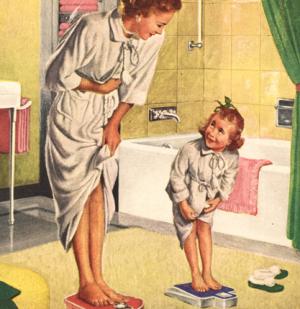
The diet industry might seem like a modern invention but the slimming craze can be traced back to your great-grandmother's day.
It's July, which for some people means only one thing: the iron grip of the pre-holiday crash diet. Shedding the bikini overspill for your imminent two weeks in Paxos is fraught with difficulties and dangers you've never even thought of. No harmless annual ritual this, even if you do a spankingly good line in self-delusion which, don't forget, is the primary quality necessary for entering into a fast and excessive weight-loss regime. "With the possible exception of the credulity of the bald-headed man in the field of hair-growers," wrote an exasperated doctor in the 1920s, "there is nowhere to be found such simple trustfulness in the veracity of printer's ink as that possessed by the obese within the realm of fat cures." Yes, crash diets have been around since your great-grandmother was eyeing up that fetching knitted knee-length number for her trip to Bognor with a new beau.
Vogue began the 20th century with an editorial sniff about a perfectly natural bit of extra plump on the womanly thigh, saying: "one would fancy it a crime to be fat." By 1922, it was practically shouting: "Long live the mode of slimness." Helena Rubinstein was telling everyone that "an abundance of fat is something repulsive." Women began pounding, rolling, steaming, dieting and drugging themselves, and submitting to "tortures rivalling those of the inquisition." Men who took to the so-called slimming craze were not such flibbertigibbets, they dieted to increase their efficiency in the office. Of course they did. No, the spreading fad for slenderisation was blamed on feminism and the regrettable passing of millions of women out of the home and into occupations which were formerly the prerogatives of men. Crash diets, along with breast-binding and hair-bobbing, were attacked as deluded attempts to reduce the female figure to male-like proportions and, moreover, they ran the risk of developing "a perversion of sex attraction which may be of the most serious character". The growing desire for a "barber-pole figure", instead of the rounded fecund feminine form, sent the press into a frenzy of fear about a broken society, rife with lesbianism, even as they reaped the rewards of adverts for a slew of dieting products and devices. All manner of quacks and charlatans were making themselves a tidy little income out of those who could pinch an inch or more and didn't much like it.
Fitness guru, Sylvia of Hollywood (100lbs and 4'8") massaged the likes of Jean Harlow, Norma Shearer, Gloria Swanson and Ina Claire so that "fat comes out through the pores like mashed potato through a colander". Recommending bathroom scales "to put the fear of God in you", she believed in eating spinach, liver, and wholewheat toast. Her much-followed Hollywood Diet was an 18-day, 585 calorie crash diet of grapefruit, oranges, Melba toast, green vegetables and hard-boiled eggs. Sylvia gave advice to the public in Photoplay and was dogged by rumours of Hollywood induced death-by-crash-diet.
Dr Lulu Hunt Peters, 220lbs at her heaviest and a best-selling author of diet books, told her readers that it was a "disgrace to be fat". Her Dieting and Health: With Key to the Calories had sold two million copies in over 55 editions by 1939, and her syndicated newspaper columns ran throughout the 1920s.
The mass tyranny of thinness, glamour and anxiety really came home to roost with the first magazine advert for bathroom scales which appeared in 1918. The "Health-O-Meter" and "The Continental" could monitor your fat in case your "graceful contour of youth became heavy and unpleasant." Then you could step into a bedtime bath souped up with Every Woman's Flesh Reducer or the Lesser Slim-Figure-Bath powders which contained the utterly useless ingredients of table salt, alum, camphor, baking soda, citric acid, cornstarch, borax, and perfume, which grossed $20,000 [£13,000] annually. The Slenmar Reducing Brush and La-mar Reducing Soap went out to 300 curvy buyers daily, and Florazona soaps, said to dissolve fat, were sold in vast quantities before being declared fraudulent by the US Postmaster-General and debarred from mail. The medical profession declared it all fantastically foolish, a load of fancy names with fancier prices.
If you couldn't wash your fat away, and let's face it that was never going to happen, you could eat special breads, bladderwrack, and pokeroot, or swallow Bile Beans (mmmmm), or masticate laxative-laced chewing gums such as Silph, Slends Fat Reducing Chewing Gum, or Elfin Fat Reducing Gum Drops. Fletcherism popularised the "chewing craze", much discussed by the British Medical Association, specifically the benefits of prolonged mastication and thorough insalivation of food which encouraged simple foods and reduced the craving for animal flesh. It had the added bonus that the "waste products of the bowel were greatly reduced in amount, and also in character, becoming odourless and inoffensive."
Lucky Strike cigarettes targeted the worried and podgy with adverts that tapped straight into this lucrative slimming market. The slogan read: "When tempted [by food] reach for a Lucky instead and avoid that future heartless shadow that threatens the modern figures by refraining from over-indulgence in things that cause excess weight." A quick fag and a diet drink staved off the appetite, and you could buy one of those instead of having lunch while getting your nails done in the beauty parlour. Dr Stoll's Diet Aid was a favourite, containing chocolate, starch, extract of roasted wholewheat and bran all mixed with water, an early Baby Food Diet as favoured today by Jennifer Aniston. The wealthy might book themselves into a thermal station for champagne, thés dansants, suppers, gaming rooms and drinking bars. No tiresome diets, walks, discipline, or "anti-fats" here, just a bit of bath-time galvanisation to soften and melt your fat, followed by a high colonic irrigation.
John Harvey Kellogg was pushing cold rain douches, sweating packs, cold dripping sheets, plunge baths and electric arc light baths – definitely not to be mixed. The vibrating chairs and platforms, trunk rollers, chest and stomach beaters at his health farms massaged the unwanted flab while the bruised but hopefully slender were fed a low-calorie, high-bulk, moderate protein diet. He entertained more than 7,000 weight watchers a year during the 1920s.
[1] [2] 下一页 【已有很多网友发表了看法,点击参与讨论】【对英语不懂,点击提问】【英语论坛】【返回首页】
|