|
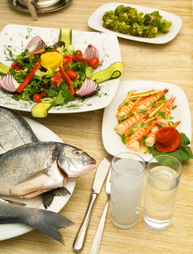
When it comes to eating (and many other indulgences), the United States is a culture of excess. To the average American, bigger plus faster equals better; we shovel massive quantities of food and beverages into our mouths on the go, scarcely taking time to taste what we’re consuming … and then we complain about how much weight we’re gaining. Meanwhile, diners in other countries favor moderately sized but well-rounded portions, savor their meals in a leisurely fashion with friends and family members, and make exercise part of their daily life. Is it any surprise, then, that so many people in other cultures sustain enviably trim figures without depriving themselves of culinary enjoyment? Let’s learn how they do it.
Spice Things Up (Thailand and Malaysia)
The hot peppers in Thai cuisine, which is legendary for its spiciness, accomplish a dual dietary purpose: they both speed metabolism and slow the eating process. For Americans, weight gain is an inevitable side effect of our tendency to wolf down our meals; our brains don’t have time to process our bodies’ signals that we’re full until we’ve already overeaten. So when spicy fare forces us to slow our pace (because we simply can’t eat three-alarm red curry as quickly as we can put away, say, McDonald’s french fries), our waistlines benefit.
In Malaysia, turmeric, a spice that conveniently grows wild in the jungle, contains a substance called curcumin, which, according to a Tufts University study, may suppress fat-tissue growth and increase our bodies’ fat-burning capacity.
Go Nuts for Nuts (Africa)
Packed with protein and often healthy fats, nuts can serve as a nutritious and filling replacement for meat and poultry. In Africa, particularly in Gambia, peanuts are a common complement to vegetables and spices in numerous soups and stews—and perhaps it’s no coincidence that this nation has not only no problems with obesity, but also one of the lowest international incidences of all types of cancer.
Make Friends with Rice and Beans (Brazil)
Americans tend to think of starchy foods as the enemy, but according to a study published in the journal Obesity Research, a diet focused on rice and beans (in contrast with a typical Western diet), such as the kind Brazilians espouse, reduces people’s risk of becoming overweight by approximately 14 percent. Low in fat and high in fiber, it’s a winning combination that stabilizes blood sugar and leaves people feeling satisfied.
Eat at Home More Often Than You Eat Out (Poland)
According to the U.S. Department of Agriculture, Americans spend an average of 37 percent of their food budget on eating out, compared with only 5 percent among Poles. No wonder U.S. obesity rates are so high: restaurants here are notorious for serving oversize, calorie- and fat-laden portions. By eating our meals at home, we not only have much more control over the ingredients we put in our mouths, but we also save money and get to spend quality time with our families. It’s a win-win.
Don’t Skip Breakfast (Germany)
It may seem counterintuitive that consuming more calories can encourage weight loss, but eating a healthful, well-balanced breakfast—such as a hard-boiled egg, whole-grain toast, and fruit—jump-starts our metabolism and satisfies our brains’ reward centers, making us less likely to succumb to the desire to indulge in high-calorie food later in the day.
Stretch Your Legs and Arms (India and the Netherlands)
In the United States, we’re apt to hop in our cars at the slightest provocation, even if the grocery store is only a few blocks away. By contrast, in the two-wheeling Netherlands, there are even more bicycles than people, and 54 percent of Dutch cyclists use them for daily activities. Take a page out of their book and pedal your way to a slim physique; an average-size adult pedaling at a moderate pace can burn around 550 calories per hour.
In India, yoga devotees hit the floor to burn calories, gain strength, and expand their minds. While people all over the United States are following suit, they often focus primarily on yoga’s potential to reduce stress, when in fact it can also be a powerful weight-loss tool: the combination of practicing on an empty stomach and building muscle boosts metabolism, which means more pounds shed even after practitioners leave the mat.
Put Meat on the Back Burner (Greece and Asia)
In contrast with the steak-and-potatoes fare that characterizes the U.S. diet, the dominant paradigm in Mediterranean countries, such as Greece, is less meat-intensive. Heart-healthy olive oil; vegetables like artichokes, spinach, eggplant, onions, and tomatoes; and proteins such as chickpeas and nuts form the building blocks of daily meals, whereas meat is treated as a supplementary item, not the main event—stuffed inside grape leaves with rice to make dolmas, for example.
Similarly, in Asian countries, meat is viewed as a garnish, rather than as the focal point of a meal; Asian diners get their protein from fish and soy, and load up on vegetables, rice, noodles, and soup to satisfy their hunger.
Drink Rooibos Tea (South Africa)
Naturally sweet and even more full-flavored than green tea, rooibos may prevent overeating by keeping drinkers well hydrated (what people often perceive as hunger pangs are actually just signs of dehydration) and contains catechins, antioxidant compounds found to help promote exercise-induced abdominal fat loss. Many tea-drinking cultures are known to have lower rates of obesity than the United States, but we’re finally catching on—rooibos tea is now available at our great beverage bastion Starbucks.
Munch on Pickled Veggies (Hungary)
Pickled produce isn’t just flavorful, appealingly crunchy, and filling; it’s also slimming. Why? The main ingredient in pickling liquid is vinegar, and the main ingredient in vinegar is acetic acid, which offers numerous health benefits, chief among them blood-pressure and blood-sugar reduction and prevention of fat formation. By snacking on not only traditional pickled cucumber, but also the pickled vegetables Hungarians enjoy—such as cabbage, tomatoes, and bell peppers—you’ll reap these benefits. And if you get sick of asking for a side of extra dills with your deli sandwich, try drizzling a little extra balsamic vinegar on your salad.
[1] [2] 下一页 【已有很多网友发表了看法,点击参与讨论】【对英语不懂,点击提问】【英语论坛】【返回首页】
|