|
Thailand aids low-income earners
The Thai government has isssued six measures to help low-income earners who suffer from soaring oil prices. Most of the regulations will start on August the 1st and last six months.
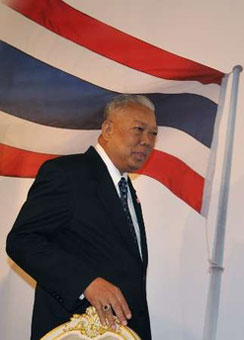 |
Thailand's Prime Minister Samak Sundaravej
arrives at the Government House before a news
conference in Bangkok July 15, 2008.(Reuters) |
Prime Minister Samak Sundaravej said on Tuesday the government decided on the move to boost the economy, and help those hardest hit. The measures include cuts in excise taxes for oil, free use of less than 50 cubic meters of tap water, and 80 units of electricity each month per household.
Samak expresses that the measures will cost the government about 1.4 billion US dollars.
Bernanke: US non-high energy and non-food prices may change
In the US, the Labor Department's report that consumer prices shot up in June at the second fastest pace in 26 years is reminding investors that rising prices still pose a threat to economic growth.
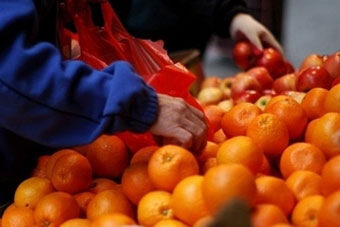 |
| People purchase food at an outdoor market in New York City in April 2008. US wholesale inflation jumped 1.8 percent in June from May, while core wholesale inflation, excluding energy and food prices, was up 0.2 percent.(AFP) |
The Chairman of the Federal Reserve, Ben Bernanke, warns that high energy and food prices have not yet greatly impacted the prices of non-food and non-energy goods, but that may soon change.
Bernanke pointed out, "Although the inflationary effect of rising oil and agriculture commodity prices is evident in the retail prices of energy and food, the extent to which the high prices of oil and other raw materials have been passed through to the prices of non-energy, non-food finished goods and services seems thus far to have been limited. But with businesses facing persistently higher input prices they may attempt to pass through such costs into prices of final goods and services more aggressively than they have so far."
【已有很多网友发表了看法,点击参与讨论】【对英语不懂,点击提问】【英语论坛】【返回首页】
|