|
Speaking of fashion, Pierre Cardin brought over a dozen models from Paris and staged a show in Beijing in 1979. The 1980s was marked by a sudden blossoming of bright colors, which, in retrospect, looked quite tacky as people back then had no sense of how to match colors. People just no longer wanted to be engulfed in a sea of dark colors.
Surprisingly, jeans did not encounter the same ideological hurdle as bell-bottoms. My parents thought they were the same as China's "work cloth", looking sturdy and honest, instead of the fluffy and ubiquitous red and yellow. And when torn, they looked really working-class.
The re-emergence of the Western suit in 1980s was another milestone. People, usually those taking official trips abroad, were given a special allowance to have suits tailor-made. When I spotted them in a crowd of hundreds in San Francisco, I could tell instantly which suit was made in China. It took a long time before those going abroad gave up these crummy suits. Nowadays, it is the trademark of a migrant worker.
In the late 1980s, there was a burst of "culture shirts" - T-shirts with funny or sarcastic slogans printed on them. Its popularity ensured its demise through official pressure.
Fashion trends usually start in metropolises like Shanghai and Guangzhou and then spread inland. You can gauge the distance by estimating which fashion was in vogue in the big cities.
Things started to change in the 1990s. With growing migration and media penetration, the gap gradually vanished, and there's so much diversity now it's easier to guess, from what one wears, his profession rather than his background.
What we listened to
By any measure, Teresa Teng was a watershed, not just for pop music in China, but for cultural consciousness as a whole. Before the Taiwan chanteuse's albums became available, music on the mainland was mostly the kind you could march to. Teng showed us, more through the way she sang than through her words, that music could be about personal feelings, especially love, which had been forbidden territory.
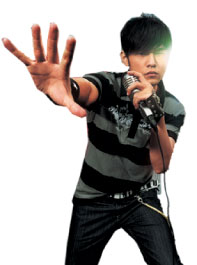
All this was made possible by a little gadget called the cassette tape recorder. Teng's songs were never allowed on air, but people copied them, one tape at a time, and passed them on to friends and neighbors. For several years, you couldn't walk through a residential area without hearing a Teng tune wafting from one of the buildings.
If Teng put sugar in our music, Cui Jian added spice. When China's own rock star burst on the scene in the late 1980s, he created an outlet for frustration. I Have Nothing, his anthem, gave voice to a whole new "lost" generation. Rock has since gained some acceptance, if not mainstream status. Today, China's army of "angry youth" is growing by leaps and bounds, but they are venting in Internet forums rather than through rock music.
Karaoke, which appeared in the late 1980s as an import from Japan, caught on here in a big way. Whereas people in the West tend to be more expressive, we Chinese are taught to be reserved. We don't have a tradition of partying. That made karaoke an instant sensation. People who were normally reserved had a platform to let their hair down, so to speak. Suddenly, singing became a form of socializing, as humor is to Americans.
上一页 [1] [2] [3] [4] [5] [6] 下一页 【已有很多网友发表了看法,点击参与讨论】【对英语不懂,点击提问】【英语论坛】【返回首页】
|