|
The long-standing rule of matching wine and food -- red wine with red meat and white wine with fish -- actually has a scientific explanation, according to two scientists working for the Mercian Corporation, a Japanese producer and marketer of wine.
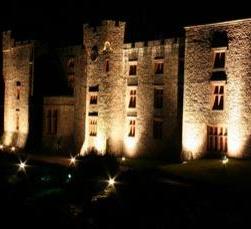
AS MEDIEVAL CASTLE bedrooms go, this one looks the part. Disturbing Flemish tapestries share the walls with stern portraits. On close inspection, the ornate fireplace's iron firedogs turn out to have devils' heads. This place is supposedly haunted by the ghost of Tom Skelton, a 16th-century jester said to have committed murder. The malevolent face of "Tom Fool" stares from a dimly lit oil painting just outside the bedroom.
My assignment is to stay overnight in the Tapestry Room at Muncaster Castle in Cumbria, UK. Having earlier reassured my editor that I laugh at ghost stories, my bravado is crumbling. I still don't believe in ghosts, but I'm scared the atmosphere will wind me up into a panic. Two previous guests have bolted in the night, one a premiership footballer, the other a diehard sceptic who came to scoff. Then I learn that I will not be able to leave the room without tripping the castle's burglar alarms. What have I let myself in for?
I am here because of a controversial theory that some reports of ghosts could be caused by unusual magnetic fields triggering strange reactions in the brain. There's a long tradition of hunting for such fields at supposedly haunted locations - and even of trying to produce them in the lab. So far, results have been mixed, so I have followed neuroscientists and psychologists to Muncaster Castle to see if, in this case at least, science can lay a ghostly mystery to rest.
Chief investigator Jason Braithwaite is a cognitive psychologist at the University of Birmingham, UK. Braithwaite is a sceptic with a long-standing interest in the psychology of paranormal experiences and beliefs. "These weird experiences appear to be part of the normal operation of the brain," says Braithwaite. "No model of brain function can be viewed as complete until it explains them."
It was in the 1970s that Michael Persinger, a neuroscientist from Laurentian University in Sudbury, Ontario, Canada, proposed that some hallucinations could be triggered by magnetic fields. It is well established that magnetic pulses of 1 or 2 teslas can stimulate neurons in the brain; it is sometimes used to treat depression. Persinger, however, was interested in much weaker fields, of about 1 to 10 microtesla, which can arise from electrical equipment such as a hairdryer, or simply exist in natural background fields.
Persinger has focused on the brain's temporal lobes, known to be involved in visual and auditory perception as well as memory. He found that people with less stable temporal lobes, prone to frequent bursts of electrical activity, were more likely to report mystical sensations when he applied complex magnetic fields to their brains.
He devised a helmet with built-in conducting coils that could produce weak fields in complex, rapidly fluctuating patterns around the temporal lobes. He claimed that as many as 4 in every 5 volunteers who wore his helmet experienced a strange "ethereal presence", which they might interpret as a dead loved one, or even as God (New Scientist, 19 November 1994, p 29).
Persinger's "God helmet" results remain controversial. How such weak magnetic fields could have this effect on the brain is not clear, although Persinger maintains that the fields' complexity seems to be the key. And not all his studies were double-blind; in other words, although the volunteer was not supposed to know whether the machine was on or off, the experimenter knew and might have unwittingly conveyed that information. When a Swedish team ran the test in a double-blind manner in 2004, their subjects reported just as many strange sensations regardless of whether the machine was on or off (Neuroscience Letters, vol 379, p 1). Persinger has criticised their study design and that debate rumbles on.
Meanwhile, several groups have investigated magnetic anomalies at supposedly haunted locations. For the past two decades, Braithwaite has focused on Muncaster Castle, home of the Pennington family for 800 years, and now open to tourists. Manager Peter Frost-Pennington told Braithwaite that many strange reports came from overnight guests in the Tapestry Room.
[1] [2] 下一页 【已有很多网友发表了看法,点击参与讨论】【对英语不懂,点击提问】【英语论坛】【返回首页】
|