|
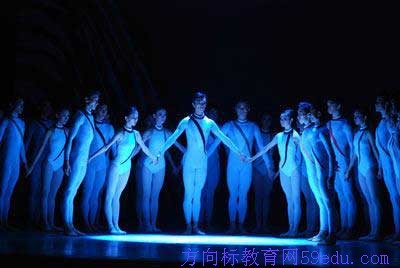
National Ballet´s "triple bill" shown in Peking University
Some people might think that ballets are boring, but that's probably because they haven't seen The National Ballet of China. The troup put on a versatile show for college students over the weekend at the centennial hall of Peking University. Here's what you get when ballet crosses from symphonic music to heavy metal.
The Modern ballet "Kazimir's Colours", the rock ballet "In the Middle Somewhat Elevated," and the symphonic ballet "Beethoven's 7th Symphony" made up the "triple bill" at the National Ballet's weekend show.
The "Triple Bill" is a current trend in dance performance. It falls somewhere between ballet drama and classical ballet. The National Ballet of China embraced the trend, then infused it with sharp contrasts.
Three works, in entirely different styles allow audiences to appreciate the broad versatility of the dancers' skills. And there are fresh themes that allow audiences to experience the art performed in a way far removed from standards such as "Swan Lake" or "the Nutcracker".
Huang Minxuan, deputy director of National Ballet of China, said, "Bringing three contemporary ballet classics together, from the 1980s and 90s, emphasizing the marked contrast in styles, is a real challenge for our troupe. It is also adventurous. Only a very small number of troupes have done it anywhere in the world. This triplet is one of the two key performances for our troupe this year. This is the show's premiere, here at Peking University."
"Kazimir's Colours", the opening piece, was created by Italian choreographer Mauro Bigonzetti in 1996 for the Stuttgart Ballet Troupe. The work is inspired by the paintings of the Russian artist Kazimir Malevich - paintings characterized by abstract graphics and sharp colours. The music was taken from Shostakovich. The dance, vibrant and witty, hit its climax on a moving pas de deux, then ushered in the finale with an inspiring trumpet fanfare.
Then came high-octane: "In the Middle Somewhat Elevated". The piece was debuted in 1987 by the Paris Opera Ballet Troupe. Set to heavy metal music, the dance overturns the classical ballet's perfect balance. Quick, electric movements and serpentine twists created a visual adventure for spectators.
After experiencing the power of modern ballet, the third set of the triplet returned to the traditional. The piece "Beethoven's 7th Symphony", was choreographed by Uwe Scholz, who has created dozens of ballet pieces set to the classics. This piece debuted in 1991. Again, the original performers were the Stuttgart Ballet Troupe.
Meng Ningning, dancer, said, "As to the three pieces, the first two are more modern. The feel is nearer to people of today. So we can put more of ourselves into the performance. We enjoy performing pieces like this."
Hao Bin, dancer, said, "The modern pieces, compared to the traditional ballet repertoire, involves more upper body skills, such as seen in the pas de deux. In the classical style we just maintain the center of gravity, but in the modern, we keep our upper body flowing."
The National Ballet of China has been rehearsing the three contemporary ballet classics, since July. The show ran for three consecutive nights at Peking University. Each of the performances from Friday through Sunday, drew resounding applause. Ticket prices were kept low for the college audience. The highest price was 200 yuan. The ballet company believes that's the way to make ballet accessible to a wider audience.
Editor:Liu Fang 【已有很多网友发表了看法,点击参与讨论】【对英语不懂,点击提问】【英语论坛】【返回首页】
|